
Commercial Metal Roof Installations
Navigating the world of commercial metal roofing can feel like a massive undertaking for building owners and property management companies. In a state like Oklahoma, where the weather drops tennis-ball-sized hail in May and unleashes 100°F heatwaves in July, choosing the right roof isn't just about structural aesthetics—it’s about protecting your bottom line.
Whether you are looking for metal roof replacement Oklahoma City, a metal roof repair Tulsa, or a metal roof contractor Norman, this comprehensive guide covers the essential products, exact installation procedures, and crucial warranty details required to make an informed investment.
Commercial Metal Roofing Products & Profiles
Not all metal roofs are created equal. The architectural design of a facility, along with its roof pitch (slope), will largely dictate which product fits best.
Standing Seam Metal Roofing (Concealed Fasteners)
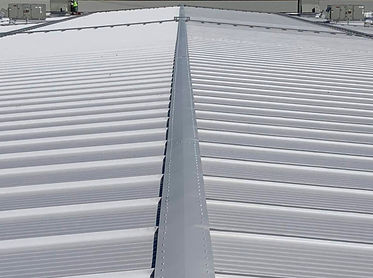
This is the gold standard for commercial properties. Standing seam systems feature elevated interlocking seams that snap together or are mechanically seamed.
American WeatherStar
-
The Advantage: The fasteners are entirely hidden beneath the metal panels. Because screws don't pierce the surface, the risk of leaks due to thermal expansion and contraction (very common in Oklahoma's fluctuating temperatures) is virtually eliminated.
CMT Components
-
Best For: Low to steep-slope office buildings, architectural structures, and premium retail spaces.
Exposed Fastener Panels (R-Panel / PBR Panel)
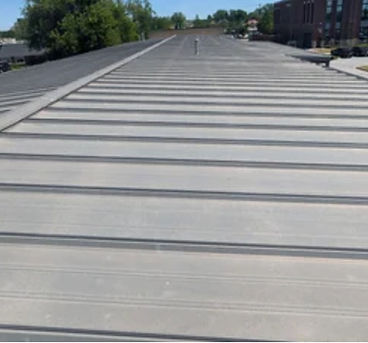
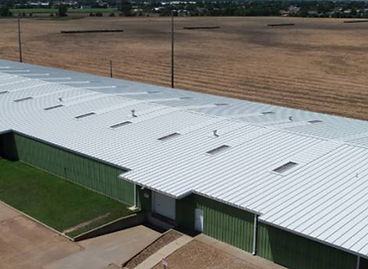
Purlin Bearing Rib (PBR) and traditional R-Panels are the workhorses of the industrial sector. These panels overlap and are fastened directly through the metal into the structure using screws with rubber EPDM washers.
-
The Advantage: Highly cost-effective and structurally rigid. PBR panels feature an extra "leg" that offers better support during overlapping, making them stronger than standard R-panels.
Mueller, Inc
-
Best For: Warehouses, agricultural buildings, and budget-conscious industrial retrofits.
Insulated Metal Panels (IMPs)
IMPs consist of an insulating foam core sandwiched between two layers of commercial-grade steel.
-
The Advantage: They provide excellent thermal performance (R-value), significantly lowering heating and cooling costs for large-scale facilities.
-
Best For: Climate-controlled warehouses, cold storage facilities, and large manufacturing plants.
Metal Materials & Gauges
For commercial applications, 22-gauge or 24-gauge steel is highly recommended (the lower the number, the thicker the metal). Thicker gauges provide maximum resistance against Oklahoma's notorious hail and high-wind events.
-
Galvalume®: Steel coated with an aluminum-zinc alloy, providing superior corrosion resistance.
-
Aluminum: Lightweight and rust-proof, though less common unless the property is near highly corrosive industrial chemical environments.
-
The Commercial Installation Procedure
A commercial metal roof is a complex engineered system. Understanding the step-by-step process helps property managers properly oversee a project and minimize disruptions to tenants. Looking for a metal roof contractor in Edmond or anywhere in Oklahoma? We serve all of Oklahoma for all of our applications.
Step 1: Structural Assessment & Tear-Off (or Flute-Fill Retrofit)
Contractors must first inspect the existing roof deck for structural integrity. Depending on local building codes and weight allowances, owners have two options:
-
Complete Tear-Off: Removing old material down to the decking to replace rotted wood or compromised steel purlins.
-
Flute-Fill / Retrofit: If the existing roof is a metal roof or low-slope membrane, specialized insulation can sometimes be laid directly over it, allowing the new metal roof to be installed on top. This saves on demolition costs and keeps the building occupied without exposure to elements.
Step 2: High-Performance Underlayment Installation
Before a single sheet of metal is laid, a high-temperature, self-adhering (peel-and-stick) underlayment is applied to the deck. This acts as a secondary moisture barrier and protects against ice damming or wind-driven rain.
CMT Components
Step 3: Layout and Clip/Fastener Alignment
Using precise reference lines, installers lay out the grid. For standing seam systems, engineered clips are fastened to the substrate, allowing the metal panels to "float" and slide slightly during temperature shifts. For PBR panels, fasteners are driven at strict intervals according to wind-uplift engineering codes.
Step 4: Panel Seaming & Detail Work
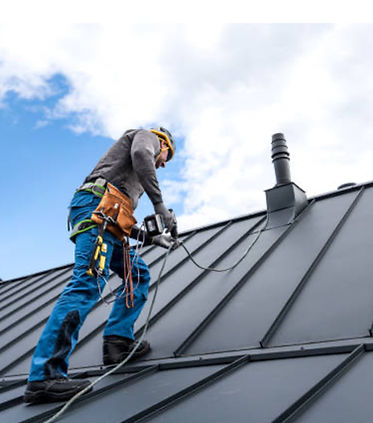
Panels are either snapped together or locked using a mechanical seaming tool. Crucial detail areas—such as valleys, penetrations (HVAC units, plumbing stacks), and rake edges—receive heavy-duty flashing, boot seals, and butyl tape to guarantee a watertight seal.
Step 5: Ridge Cap & Ventilation Systems
Finally, solid or vented ridge caps are installed along the roof peaks with custom foam closure strips to prevent pest entry and wind-driven rain while maintaining proper attic or plenum ventilation.
Commercial Metal Roof Warranties Explained
Warranties protect a capital expenditure. In commercial roofing, it is vital to know that a warranty is usually split into three distinct categories.
Warranty Type What It Covers Typical Duration Who Provides It
Paint / Finish WarrantyCovers fading, chalking, cracking, or peeling of the protective coating (e.g., Kynar 500 / PVDF finishes).20 to 45 YearsMetal Manufacturer
Substrate / Corrosion WarrantyGuarantees the raw metal panels will not rust through or perforate under normal environmental conditions.20 to 25 YearsMetal Manufacturer
Workmanship WarrantyCovers leaks or structural failures caused by improper installation or installation errors.2 to 10 YearsRoofing Contractor
The Ultimate Protection: No Dollar Limit (NDL) Warranty
For major commercial assets, asset managers should ask for a Manufacturer’s No Dollar Limit (NDL) Warranty.
-
Under an NDL warranty, if a leak occurs due to material failure or certified contractor installation error, the manufacturer covers the full cost of the repair, regardless of the price tag... no proration or any out of pocket expense.That why a certified metal roof contractor Oklahoma City or a certified metal roof contractor Tulsa is essential to your bottom line.
Oklahoma Pertinent Information
Installing a commercial roof in Oklahoma requires specific local considerations that out-of-state entities often overlook.
-
Wind Uplift Ratings (ASCE 7): Because Oklahoma sits firmly in America's wind corridors, roofs must be engineered to withstand severe wind uplift. Ensure your contractor pulls engineering calculations matching the local municipal building codes for wind speed.
-
Hail Mitigation & Insurance Discounts: Class 4 impact-resistant metal roofs can drastically reduce commercial insurance premiums in Oklahoma. Speak with your provider about premium credits for installing impact-rated standing seam panels.
-
Thermal Expansion: Oklahoma can experience a 50-degree temperature swing in a single 24-hour period. Standing seam roofs handle this seamlessly, whereas cheaper exposed-fastener roofs will eventually widen their own screw holes over time, necessitating routine maintenance and tightening every 5–7 years.
-
This is all the more reason to have a certified, licensed, bonded and insured Oklahoma commercial roofing contractor to represent your interests. you have found your metal roof installer Edmond and all of Central Oklahoma.
Capital Investment Summary
A commercial metal roof is a premium choice that boasts a lifespan of 40 to 60 years when maintained correctly. For property managers looking to maximize asset value, lower utility bills via cool-roof reflective coatings, and secure decades of weather tightness, a high-quality metal roof offers an undeniable return on investment.
Are you evaluating a commercial property for a roof replacement? Contact our local, manufacturer-certified commercial roofing company Oklahoma City, certified commercial roofing company Tulsa or metal roofing contractor Stillwater to schedule an inspection and get a tailored wind-load analysis for your facility.
The Benefits of Commercial Metal Roofing for Oklahoma Property Owners
When managing commercial real estate, every capital improvement must justify its upfront cost. While a commercial metal roof requires a higher initial investment than traditional built-up (BUR) or TPO roofs, the long-term return on investment (ROI) is unmatched—especially when facing Oklahoma’s volatile climate.
1. Drastic Reduction in Commercial Insurance Premiums
Oklahoma leads the nation in severe hail and wind damage claims. Because of this, insurance companies offer massive financial incentives for risk mitigation.
-
Class 4 Impact Resistance: Most high-quality commercial steel roofs carry a Class 4 impact rating (UL 2218). Installing a certified Class 4 system often qualifies building owners for up to a 25% to 35% discount on commercial property insurance premiums in Oklahoma. Over a 40-year lifespan, these premium savings can completely offset the original cost of the roof.
2. Extreme Weather Resilience & Wind Resistance
Oklahoma sits right in the heart of "Tornado Alley," making wind-uplift performance a primary structural concern.
-
High-end standing seam metal roofs are engineered and tested to withstand wind speeds of up to 140 to 180 mph, easily meeting and exceeding local Oklahoma municipal building codes.
-
Unlike single-ply membranes or asphalt shingles, metal panels cannot shatter, peel back, or become easily punctured during high-velocity wind and hail storms.
3. Lower Utility Costs via "Cool Roof" Energy Efficiency
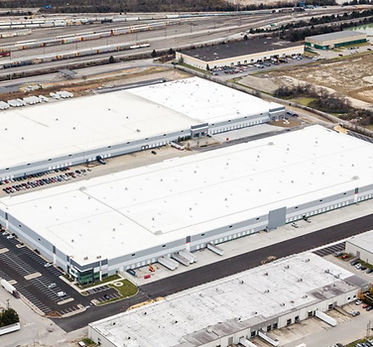
Large flat or low-slope commercial buildings can become massive heat sinks during hot Oklahoma summers, driving HVAC units to their breaking points.
-
Modern commercial metal roofs are coated with highly reflective PVDF (Kynar 500®) finishes. These "cool roof" pigments reflect solar radiation back into the atmosphere rather than absorbing it into the building plenum.
-
By reducing peak cooling demand by 15% to 40%, property managers see an immediate drop in monthly electric bills and less wear-and-tear on rooftop HVAC units.
4. Unmatched Longevity and Low Lifecycle Cost
A cheap roof that needs to be replaced every 15 years is far more expensive than a premium roof that lasts for over half a century.
-
50+ Year Lifespan: While a standard TPO or modified bitumen roof typically lasts 15 to 20 years, a properly installed commercial Galvalume® or standing seam metal roof routinely lasts 50 to 60+ years.
-
Minimal Maintenance: Metal roofs do not dry out, rot, or crack. Beyond basic annual inspections to clear debris from gutters and check flashing around commercial HVAC units, maintenance costs are remarkably low, freeing up property management operational budgets.
5. Increased Property Valuation and Tenant Retention
A structurally sound, aesthetically pleasing building attracts higher-quality tenants and commands premium lease rates.
-
Zero Leak Disruptions: Roof leaks interrupt business operations, damage inventory, and frustrate commercial tenants. A metal roof provides structural peace of mind, protecting tenant relations.
-
Sustainability & ESG Goals: Metal roofing is 100% recyclable at the end of its life and often contains up to 25% to 35% recycled content. For corporations looking to meet strict environmental, social, and governance (ESG) criteria, metal is the premier choice. It is also the most structurally sound substrate for mounting commercial solar arrays.
Your five star google rated metal roofing contractor Oklahoma City has the knowledge and experience you can trust. in addition, if your looking for metal roof repair Tulsa or metal roof repair Norman we have you covered.
Looking for a commercial metal roofing company Oklahoma that knows their stuff? Call today for service tomorrow. 405-300-0972

Get a Quote
Send us your contact info to set up a complimentary consultation