
Commercial Solar Panels Oklahoma

Is Your Oklahoma City Commercial Roof Ready for Solar?
Oklahoma City businesses are sitting on one of the most valuable untapped energy assets in the country — their rooftops. With an average of 235 sunny days per year, Oklahoma City ranks among the best markets in the United States for commercial solar panel installation. Yet thousands of square feet of commercial rooftop space across the OKC metro remain unproductive, silently absorbing sunlight that could be generating electricity and slashing energy bills.
Whether you operate a warehouse in Midwest City, a retail strip in Edmond, or an office complex near the Bricktown district, your commercial roof type plays a critical role in determining the feasibility, cost, and return on investment of a solar installation. Not all commercial roofs are created equal — and understanding which applications work best can save you tens of thousands of dollars before you ever speak to an installer.
This guide breaks down every major commercial roof type used across Oklahoma City and explains exactly how solar panels interact with each one.
Why Commercial Solar Makes Financial Sense in Oklahoma City Right Now
Before diving into roof types, it’s worth understanding the economic landscape driving commercial solar adoption across OKC.
Oklahoma’s deregulated energy market, combined with federal investment tax credits (ITC) — currently offering a 30% tax credit under the Inflation Reduction Act — and net metering policies from OG&E and PSO, have dramatically shortened payback periods for commercial solar in the region. Most Oklahoma City commercial solar installations achieve full payback in 6 to 9 years, with systems designed to perform for 25 to 30 years.
Add in MACRS accelerated depreciation (allowing businesses to depreciate 85% of system costs in year one), and the financial case for commercial solar in Oklahoma City has never been stronger.
Commercial Roof Applications:
A Complete Breakdown
TPO and EPDM Flat Roofs (Low-Slope Membrane Roofs)
Best for: Warehouses, big-box retail, distribution centers, manufacturing facilities
Flat and low-slope membrane roofs — including TPO (thermoplastic polyolefin) and EPDM (ethylene propylene diene monomer) — are the most common commercial roof type in Oklahoma City and among the most solar-friendly surfaces available.
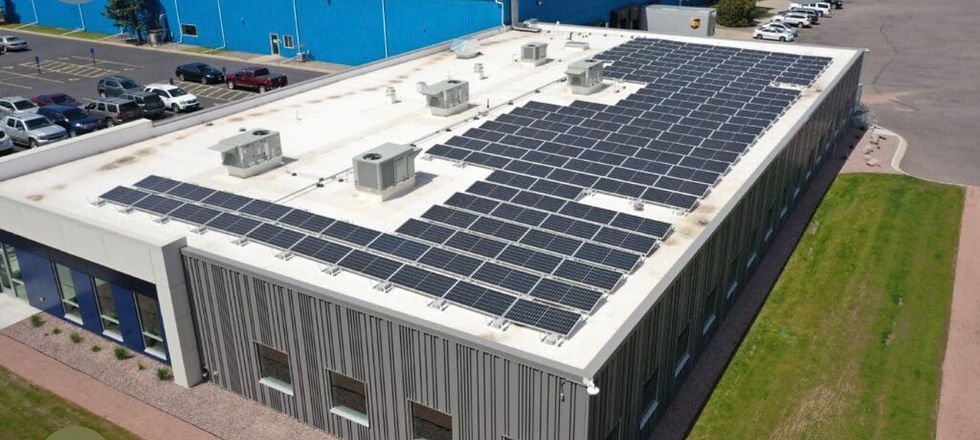
These roofs offer maximum flexibility in panel positioning. Installers use either ballasted racking systems (weighted mounts that require no roof penetrations) or mechanically attached systems depending on roof age and condition. The relatively smooth, unobstructed surface of a flat commercial roof in OKC means larger arrays are possible, translating directly to greater energy output.
Key solar advantages on TPO/EPDM roofs:
• Panels can be tilted at the optimal angle (typically 10–15° in Oklahoma City’s latitude of 35°N) to maximize year-round solar capture
• Ballasted systems preserve roof warranties by eliminating penetrations
• Large unobstructed surface area accommodates high-density panel layouts
• Easy access for maintenance and cleaning
Oklahoma City consideration: Given OKC’s hail exposure, installers typically recommend IEC 61215-certified hail-resistant panels and ballasted systems with wind uplift engineering calculations tailored to Oklahoma’s severe weather patterns.
Metal Roofs (Standing Seam and Corrugated)
Best for: Agricultural facilities, industrial buildings, metal commercial warehouses, auto dealerships, churches
Standing seam metal roofs are widely considered the gold standard for commercial solar installation, and they’re plentiful across Oklahoma City’s industrial corridors and suburban commercial districts.
The reason is simple: standing seam metal roofs allow solar panels to be attached using non-penetrating S-5! clamps or similar seam clamps that grip directly onto the raised seams. This means zero roof penetrations, no compromised warranties, and a dramatically faster installation process.
Corrugated metal roofs are also excellent candidates, though they typically require penetrating fasteners with proper sealants.
Key solar advantages on metal roofs:
• Non-penetrating clamp systems preserve roof integrity completely
• Metal roofs are highly durable — solar systems and roof lifespans align well (both 25–40 years)
• Metal’s reflective properties can improve module performance in Oklahoma’s summer heat
• Lower installation labor costs due to simplified mounting
• Ideal for agribusiness operations east and south of Oklahoma City
Oklahoma City consideration: Many metal-roofed facilities in the OKC metro — particularly in the Tri-City industrial areas and Moore/Norman commercial zones — are excellent candidates for large-scale commercial arrays due to their size and structural integrity.
Modified Bitumen and Built-Up Roofing (BUR)
Best for: Older commercial buildings, mid-rise office buildings, mixed-use properties downtown and midtown OKC
Modified bitumen and built-up roofing (BUR) systems are common on older commercial buildings throughout central Oklahoma City, Midtown, and the Automobile Alley district. These multi-layer asphalt-based systems are generally compatible with solar installation, though they require more thorough inspection before committing to an installation plan.
Solar on modified bitumen roofs typically uses a penetrating mount system with proper flashing and sealant, or a ballasted system if the roof’s load capacity allows. A structural engineering assessment is strongly recommended before proceeding.
Key solar advantages on modified bitumen/BUR roofs:
• Wide availability in OKC’s older commercial building stock
• Compatible with both ballasted and penetrating mount systems
• Roof replacement can often be coordinated with solar installation to reduce long-term costs
• Strong tax incentive alignment when roof and solar are co-installed (combined project may qualify for enhanced depreciation)
Oklahoma City consideration: If your modified bitumen roof is within 5 years of end-of-life, many OKC solar contractors recommend a combined roof replacement and solar installation project. This approach bundles costs and can qualify for additional depreciation benefits.
PVC Roofing Systems
Best for: Food processing facilities, chemical plants, healthcare campuses, laboratory buildings
PVC (polyvinyl chloride) roofing is increasingly common on specialized commercial and industrial facilities in the Oklahoma City metro, particularly in the healthcare corridor along NW Expressway and in industrial parks near Will Rogers World Airport.
PVC roofs are highly solar-compatible. Their smooth, white surface reflects heat (reducing cooling loads), and their chemical resistance makes them suitable for the adhesives and mounting hardware used in solar installation. Like TPO systems, PVC roofs work well with both ballasted racking and heat-welded attachment systems.
Key solar advantages on PVC roofs:
• Cool roof properties synergize with solar to reduce total building energy consumption
• Strong compatibility with heat-welded mounting pads (no penetrations)
• High durability extends the coordinated roof-and-solar lifespan
• Ideal for facilities with high energy demands (hospitals, data centers, food processing)
Oklahoma City consideration: Healthcare and medical office campuses in the OKC metro — particularly in the Mercy, Integris, and OU Health neighborhoods — represent a significant opportunity for PVC-roof solar deployment given their large footprints and consistently high energy consumption.
Asphalt Shingle Roofs on Commercial Buildings
Best for: Small commercial buildings, retail strip centers, franchise locations, professional office parks
While less common on large commercial structures, asphalt shingle roofs appear frequently on smaller commercial buildings across Oklahoma City — particularly franchise fast-food locations, small professional office parks in Edmond and Yukon, and neighborhood retail centers.
Solar installation on commercial asphalt shingle roofs follows the same approach as residential: penetrating lag bolt mounts with proper flashing, attached to rafters or trusses below. The primary constraint is the roof’s age and structural condition. Shingle roofs approaching 15–20 years of age may need replacement before or alongside solar installation.
Key solar advantages on asphalt shingle roofs:
• Familiar installation method with well-established contractor expertise in OKC
• Suitable for smaller commercial systems (25–100 kW range)
• Can be combined with a new shingle roof installation for timing efficiency
• Wide pool of qualified installers across the Oklahoma City metro
Oklahoma City consideration: Oklahoma’s severe hail environment warrants impact-resistant Class 4 shingles under any commercial solar array. Many OKC insurers now offer premium discounts for Class 4 shingles, which can offset part of the roof upgrade cost.
Green Roofs and Solar Integration
Best for: LEED-certified buildings, municipal structures, corporate sustainability projects, urban developments
Oklahoma City’s growing commitment to sustainability — including the city’s OKC23 sustainability plan — has sparked interest in green roofs, particularly for new construction in the Bricktown, Deep Deuce, and Midtown redevelopment zones. Green roofs (vegetated roofing systems) and solar panels are increasingly being deployed together in what the industry calls a “biosolar” or “agrivoltaic” rooftop system.
The vegetated layer keeps the roof surface cooler, which improves solar panel efficiency (panels lose approximately 0.5% efficiency for every degree Celsius above 25°C). In return, the solar array shades the vegetation, reducing water demand. It’s a genuinely synergistic pairing.
Key solar advantages on green roofs:
• Improved panel efficiency through passive cooling from vegetation
• Qualifies for additional LEED credits and sustainability certifications
• Supports OKC’s urban sustainability goals (relevant for city contracts and incentives)
• Strong PR and brand value for businesses with sustainability mandates
Oklahoma City consideration: Green roof solar systems in OKC should be engineered with Oklahoma’s wind and hail loads in mind. The ballasted weight of growing media can actually improve wind resistance of solar arrays on flat-roof systems.
Carport and Canopy Solar Structures (Non-Traditional Roof Applications)
Best for: Parking lots, car dealerships, large retail with surface parking, universities, hospitals, municipal facilities
While not a traditional “roof” application, solar carports and parking canopies deserve inclusion in any discussion of commercial solar in Oklahoma City — and they’re gaining serious momentum across the OKC metro.
Solar carports involve mounting elevated panel arrays over surface parking lots, turning what would otherwise be unproductive asphalt into a dual-purpose energy asset. The panels generate electricity while simultaneously providing shade for vehicles — a highly valued feature in Oklahoma City’s intense summer heat.
Key solar advantages of carport/canopy systems:
• No rooftop structural requirements or roof warranty concerns
• Provides genuine customer and employee value (shaded parking in OKC summers)
• Highly visible — strong marketing signal for sustainability-focused businesses
• Can incorporate EV charging stations directly beneath the canopy
• Scalable from a single row to multi-acre arrays
Oklahoma City consideration: Universities like OU, OCU, and OSU-OKC have led carport solar adoption in the metro. Large-surface retailers along Memorial Road, NW Expressway, and SW 89th Street represent significant untapped opportunity given their extensive surface parking footprints.
Frequently Asked Questions About Commercial Solar Roofs in Oklahoma City
Q: What is the best roof type for commercial solar installation in Oklahoma City?
Standing seam metal roofs and TPO flat roofs are generally considered the best commercial roof types for solar installation in Oklahoma City. Metal roofs allow non-penetrating clamp systems that preserve roof warranties, while flat TPO roofs offer maximum design flexibility and large unobstructed surface areas ideal for high-density panel arrays.
Q: Does Oklahoma City get enough sun for commercial solar to be worth it?
Yes. Oklahoma City averages approximately 235 sunny days per year and receives about 5.8 peak sun hours per day — well above the national average of 4.5 hours. This makes OKC one of the most productive solar markets in the central United States for commercial applications.
Q: How much does commercial solar installation cost in Oklahoma City?
Commercial solar installation in Oklahoma City typically ranges from $1.50 to $2.50 per watt before incentives, depending on system size, roof type, and complexity. After applying the 30% federal Investment Tax Credit (ITC) and MACRS depreciation, the effective net cost is often reduced by 50–60% within the first year.
Q: Can I install solar on an older commercial building in Oklahoma City?
Yes, but a structural assessment is recommended first. Many older commercial buildings in central OKC were not designed with solar loads in mind. A licensed structural engineer should evaluate the roof’s load capacity before installation. In many cases, targeted reinforcement or a ballasted system with careful load distribution makes installation feasible on older structures.
Q: What incentives are available for commercial solar in Oklahoma City?
Oklahoma City commercial solar projects can access the federal 30% Investment Tax Credit (ITC), MACRS accelerated depreciation (85% in year one under bonus depreciation rules), net metering credits from OG&E or PSO, and in some cases, USDA REAP grants for qualifying rural or agricultural businesses in surrounding areas.
Choosing the Right Commercial Solar Installer in Oklahoma City
Not all commercial solar installers in Oklahoma City have equal experience across roof types. When evaluating contractors for your OKC commercial solar project, ask specifically about their experience with your roof type, their engineering capabilities for Oklahoma’s wind and hail loads, their relationships with roofing manufacturers (to preserve warranties), and whether they can assist with incentive documentation and utility interconnection agreements.
Look for NABCEP-certified installers with documented commercial experience in the Oklahoma City metro and verifiable references from similar commercial roof applications.
The Bottom Line for Oklahoma City Commercial Property Owners
Your commercial roof is more than a weather barrier — it’s a potential power plant. Whether you own a warehouse with a TPO membrane in Yukon, a metal-roofed distribution center near the Port of Catoosa, or a LEED office building in Midtown Oklahoma City, there is almost certainly a solar application suited to your structure.
Oklahoma City’s combination of abundant sunshine, strong federal incentives, favorable utility policy, and an established local solar contracting market makes 2025 and 2026 an exceptional window for commercial solar investment. With payback periods as short as six years and systems producing clean energy for three decades, the question for OKC commercial property owners is no longer if solar makes sense — it’s which roof type you have and when you want to start reducing your energy costs.


Comments