
Commercial Roofing Options
Underwriting Resilience: The Best Commercial Roofing Options for Portfolio Optimization
For private equity asset managers, real estate syndicators, and regional property management companies, managing a commercial real estate portfolio across the central and southern plains is an exercise in risk mitigation.
This region—spanning Oklahoma, Kansas, Missouri, and Texas—comprises one of the most volatile weather corridors in the world. Often referred to by insurance carriers as the "Hail Belt" and "Tornado Alley," these four states are ground zero for multi-billion-dollar convective storms, extreme wind uplift, and punishing summer heat waves.
When managing diversified commercial portfolios (including industrial warehouses, retail strip centers, office complexes, and multifamily assets), your roofing system is your primary line of defense. A reactive, low-bid roofing strategy leaves your Net Operating Income (NOI) exposed to skyrocketing insurance deductibles, massive capital expenditure (CapEx) shocks, and tenant displacement.
To protect your yield and maximize property valuations, a proactive, asset-specific approach to material selection is required. This guide analyzes the best commercial roofing systems engineered to withstand this intense regional climate while driving portfolio value.
The Core Financial Challenge: The New Era of Insurance and Weather Risk
The commercial property insurance landscape across Texas and the Midwest has fundamentally transformed. Driven by catastrophic convective storms, insurance carriers have largely abandoned flat deductibles in favor of percentage-based wind and hail deductibles (frequently ranging from 1% to 5% of a building’s total insured value).
If a retail center in Dallas or a warehouse in Oklahoma City is valued at $15 million, a 3% deductible translates to a $450,000 out-of-pocket expense before an insurance check is written.
Furthermore, standard roofing materials suffer rapid degradation from the region's intense thermal cycling—where a roof surface can plummet from 150°F to 70°F in a few hours during a seasonal cold front, tearing apart vulnerable seams. Portfolio operators must prioritize systems that hold elite UL 2218 Class 4 Impact Ratings or FM Global Very Severe Hail (VSH) classifications.
Top Commercial Roofing Options for Southern & Midwestern Portfolios
1. High-Mil TPO over Heavy-Duty Cover Boards (Best for Flat Industrial & Retail Assets)
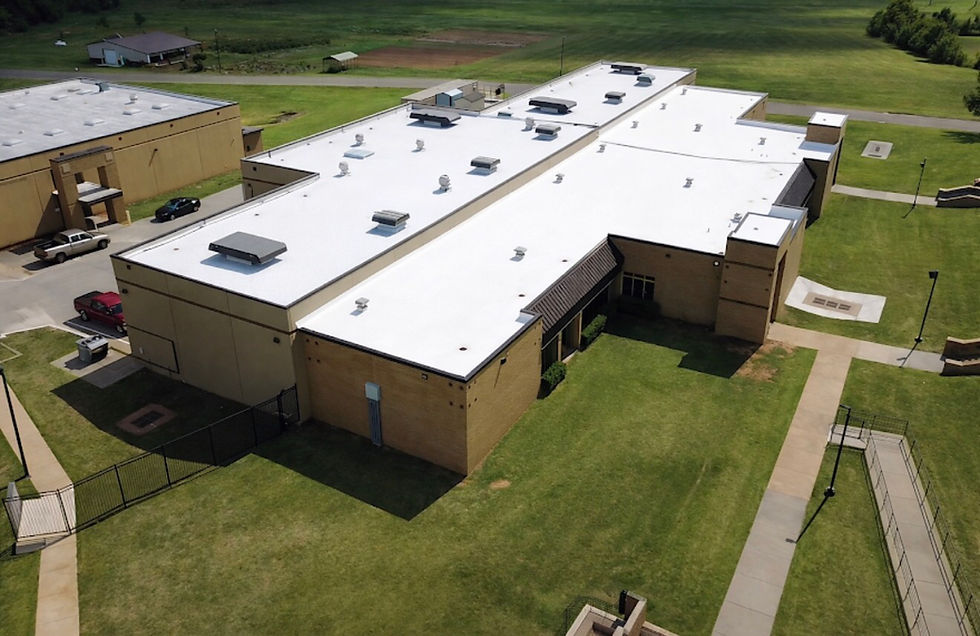
Thermoplastic Polyolefin (TPO) remains the dominant choice for low-slope commercial properties, but the standard 45-mil membrane is insufficient for this region. To survive severe weather, institutional portfolios utilize an engineered 80-mil TPO system combined with a high-density cover board (such as DensDeck StormX or DEXcell VSH).
The Mechanics: The high-density cover board acts as a hard armor layer directly beneath the single-ply membrane. When large hail strikes the roof, the cover board absorbs the kinetic energy, preventing the TPO membrane from fracturing against the underlying insulation.
The Financial Advantage: White TPO is highly reflective (Cool Roof technology). In sun-drenched states like Texas and Oklahoma, it reflects up to 80% of solar radiation, reducing peak cooling costs by 10% to 30% and directly lowering utility overhead.
Strategic Fit: Distribution centers, big-box retail, and flat-roof office parks.
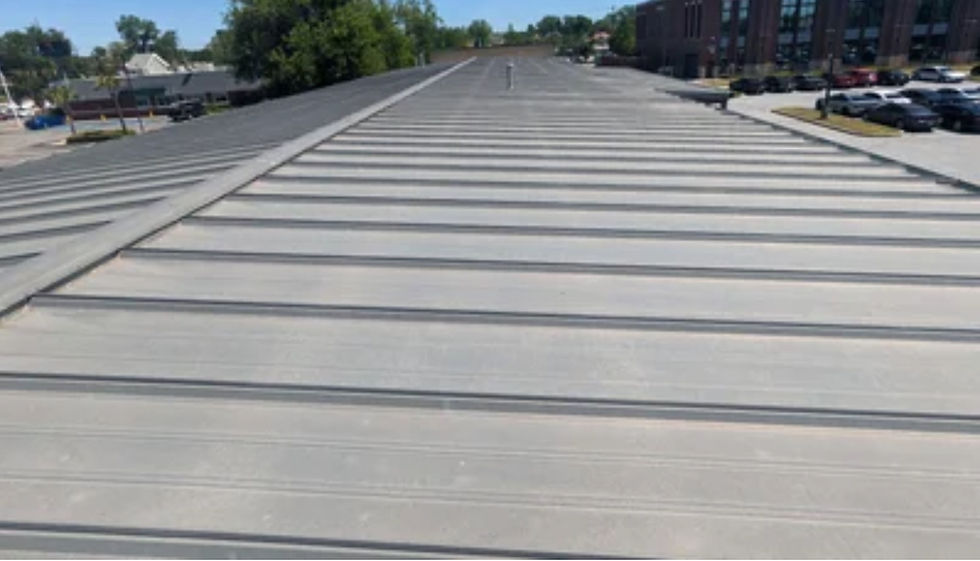
2. Standing Seam Metal Roofing (Best for Long-Term Asset Retention & Class-A Office)
If your private equity firm or management company operates on a long-term hold strategy (15+ years), standard membrane roofs will eventually require replacement on your watch. Standing seam metal roofing offers an unparalleled structural lifecycle.
The Mechanics: Unlike screw-down metal roofs that use exposed fasteners (which back out over time due to thermal expansion), standing seam profiles feature concealed clips. The interlocking panels expand and contract freely without creating leak points, easily resisting wind speeds exceeding 140 mph.
The Financial Advantage: While carrying a higher upfront CapEx cost, an architectural metal roof boasts a 50 to 70-year lifespan. It virtually eliminates future reroofing cycles from your fund's underwriting models and carries a UL 2218 Class 4 rating, unlocking permanent commercial property insurance premium discounts.
Strategic Fit: Class-A office buildings, premium retail pavilions, and high-value cold storage facilities in high-wind regions like Kansas and Oklahoma.
3. Modified Bitumen with Polymer Enhancements (Best for High-Traffic Multi-Tier Roofs)
For properties with dense rooftop infrastructure—such as heavy HVAC arrays, cell towers, or frequent maintenance traffic—single-ply membranes run a high risk of puncture. In these scenarios, a multi-ply Modified Bitumen (Mod-Bit) system is ideal.
The Mechanics: Modern Mod-Bit systems utilize SBS (Styrene-Butadiene-Styrene) rubberized polymers blended into the asphalt. This creates a highly elastic, thick, multi-layered roof that effortlessly deflects foot traffic, tools, and moderate hail.
The Financial Advantage: Redundancy. If the top cap sheet suffers a minor puncture, the underlying base sheets maintain the building's watertight seal, preventing catastrophic interior damage.
Strategic Fit: Multi-story office complexes, medical facilities, and urban mixed-use assets across Missouri and Texas.
4. Fluid-Applied Roof Coatings (Best for Mid-Lifecycle CapEx Preservation)
When an existing TPO, metal, or modified bitumen roof is approaching the end of its design life but remains structurally sound, a complete tear-off is often a waste of capital. A silicone roof coating restoration system allows asset managers to reset the clock.
The Mechanics: A seamless, monolithic liquid membrane is sprayed or rolled directly onto the prepared existing roof. It fills micro-cracks, seals vulnerable flashings, and creates a completely watertight barrier.
The Financial Advantage: Roof coatings cost 40% to 60% less than a full roof replacement. Crucially for private equity accounting, coatings are typically classified as a maintenance expense rather than a capital improvement, allowing for 100% tax write-offs in the current tax year under Section 179.
Strategic Fit: Properties with 12 to 18-year-old roofs where the operator wants to boost NOI and prepare the asset for disposition without a six-figure capital hit.
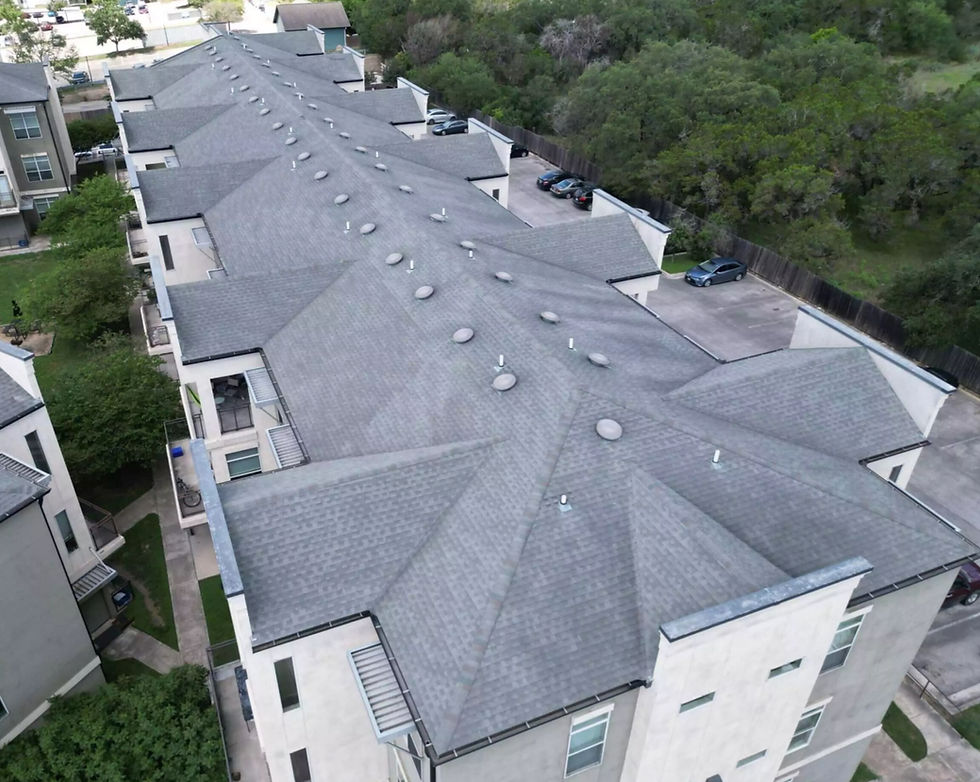
Commercial Roofing Systems Matrix: Portfolio Comparison
System Option | Primary Weather Defense | Expected Lifespan | Upfront CapEx | Financial & Valuation Impact |
80-Mil TPO + VSH Board | Elite Hail Absorption & UV Reflection | 20–25 Years | Moderate | Cuts cooling costs; standard institutional preference. |
Standing Seam Metal | Max Wind Uplift & Zero Fastener Leaks | 50–70 Years | High | Maximum asset lifespan; highly favorable for exit valuations. |
SBS Modified Bitumen | Extreme Puncture & Foot-Traffic Resistance | 20–30 Years | Moderate-High | Redundancy lowers localized leak liabilities. |
Fluid-Applied Silicone | Seamless Waterproofing & Thermal Shock Cure | 10–20 Years | Low | Instant CapEx savings; immediate current-year tax deduction. |
Frequently Asked Questions (FAQ)
How can a property management firm verify a property qualifies for a roof coating instead of a tear-off?
Before approving a restoration contract, the roofing partner must conduct a professional core analysis and an infrared moisture scan. If the scan reveals that the underlying insulation is dry and the deck is intact, the roof can legally and safely be coated. Saturated insulation requires localized replacement or a full tear-off.
What is the advantage of securing an NDL warranty for a multi-state portfolio?
A No Dollar Limit (NDL) warranty is a manufacturer-backed guarantee that covers 100% of the labor and material costs required to fix covered leaks, with no financial spending cap. Because NDL warranties are fully transferable, they add immense value during property dispositions, de-risking the asset for potential buyers during due diligence.
Do Class 4 roofs actually lower multifamily and commercial premiums in these states?
Yes. Insurance departments in Texas and Oklahoma explicitly mandate that carriers offer premium credits for buildings utilizing certified UL 2218 Class 4 materials. Reductions can range anywhere from 15% to 35% on the property wind/hail premium component.
De-Risk Your Portfolio Before Next Spring
In the central U.S., a devastating hailstorm or high-wind event is a statistical certainty. Leaving your commercial real estate assets under standard, unreinforced membranes or aging structures exposes your fund to unpredictable cash flow shocks. By aligning your specific asset exit strategy with high-performance TPO, standing seam metal, or silicone restorations, you actively insulate your yield, protect your tenants, and drive long-term property valuations.
Want to audit your portfolio's storm readiness? Contact our commercial roofing division today to arrange a comprehensive asset-by-asset roof condition assessment, core analysis, and custom capital forecasting review across Oklahoma, Kansas, Missouri, and Texas.
B2B Search & Intent Strategy Insights
What is the best commercial roofing system for the Hail Belt? An 80-mil TPO membrane paired with an FM-approved Very Severe Hail (VSH) glass-mat cover board, or a 24-gauge standing seam metal roof.
How can private equity maximize roofing ROI? Utilizing fluid-applied silicone coatings to defer full replacements by 10–20 years while writing off 100% of the expense in the current tax year under Section 179.
The benefit of utilizing our manufacture certified installation crews: Ensure your selected roofing partner maintains master-certified applicator status with premier manufacturers (GAF, Carlisle, Elevate) to guarantee the issuance of transferable No Dollar Limit (NDL) warranties.


Comments